

The quality of rice depends on much more than the variety grown in the field. Rice milling and grading are two important processes that determine the appearance, texture, cleanliness, and overall quality of Pakistani rice. Proper processing helps exporters deliver consistent rice that meets the expectations of customers around the world.
The Importance of Rice Milling
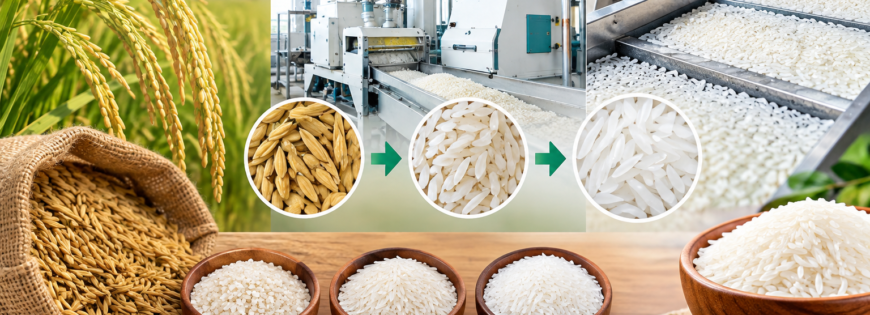
Rice milling removes the outer husk and converts paddy into edible white rice. During this process, modern milling machines carefully remove the husk while minimizing broken grains. Proper milling helps preserve the natural shape and length of premium varieties such as 1121 Basmati and Super Kernel Basmati.
Poor milling can result in excessive broken grains, discoloration, and damaged kernels. For export-quality rice, careful milling is essential to maintain a clean appearance and attractive grain structure.
How Rice Grading Improves Quality
After milling, rice is graded according to factors such as grain size, length, broken percentage, color, moisture, and purity. Advanced sorting and grading equipment can remove unwanted materials, immature grains, damaged kernels, and other impurities.
Grading allows suppliers to create consistent rice specifications for different markets. Buyers can select rice according to their requirements, whether they need extra-long Basmati rice for restaurants, premium rice for retail packaging, or commercial-grade rice for large-scale food businesses.
Why Quality Processing Matters for Export
International rice buyers expect consistency from every shipment. Proper milling and grading help Pakistani rice exporters maintain uniform quality from one order to the next. Clean, well-graded rice also improves cooking performance and gives the finished dish a better appearance.
For importers and wholesalers, choosing rice that has been professionally milled and graded can reduce quality issues and improve customer satisfaction.
Conclusion
Rice milling and grading play a vital role in transforming Pakistani paddy into high-quality export rice. From removing the husk to sorting grains by size and quality, each step contributes to the final product. Reliable processing helps Pakistani rice meet international standards and makes it a trusted choice for buyers worldwide.