


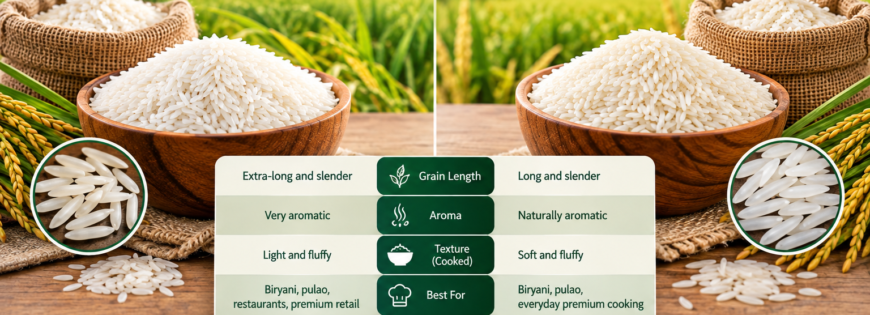
1121 Basmati Rice vs Super Kernel Basmati is an important comparison for buyers who want to choose the right Pakistani Basmati rice for homes, restaurants, catering businesses, wholesale supply, or international markets. Both varieties are known for their long grains, pleasant aroma, excellent cooking quality, and popularity in traditional South Asian dishes. However, they have differences in grain appearance, texture, cooking characteristics, market demand, and typical applications.
Understanding these differences can help you select the variety that best matches your requirements and budget.
1121 Basmati Rice
1121 Basmati Rice is one of the most recognized long-grain rice varieties from Pakistan. It is particularly famous for its exceptionally long and slender grains. When cooked, the grains can become significantly longer while maintaining an attractive appearance.
One of its biggest advantages is its presentation. The long, separate grains make it especially popular for biryani, pulao, weddings, catering, and premium restaurant meals.
1121 Basmati also has a pleasant natural aroma and a light, fluffy texture when properly cooked. Its ability to expand during cooking makes it attractive to commercial food businesses because a relatively small quantity of uncooked rice can produce a large volume of cooked rice.
Super Kernel Basmati Rice
Super Kernel Basmati is another premium Pakistani rice variety with a strong reputation in domestic and international markets. It has long, slender grains and the traditional characteristics associated with high-quality Basmati rice.
Super Kernel is appreciated for its aromatic flavor, soft texture, and attractive cooked appearance. It is widely used for biryani, pulao, rice dishes, and everyday meals.
Compared with 1121 Basmati, Super Kernel generally has a slightly different grain profile and cooking behavior. Many consumers choose it because they prefer its traditional Basmati characteristics and balanced combination of aroma, texture, and taste.
1121 Basmati Rice vs Super Kernel Basmati: Key Differences
When comparing 1121 Basmati Rice vs Super Kernel Basmati, several factors should be considered. Both are premium rice varieties, but their characteristics can make one more suitable than the other depending on the intended use.
| Feature | 1121 Basmati Rice | Super Kernel Basmati |
|---|---|---|
| Grain | Extra-long and slender | Long and slender |
| Aroma | Pleasant and aromatic | Pleasant and aromatic |
| Texture | Light and fluffy | Soft and fluffy |
| Appearance | Extra-long and attractive | Long and elegant |
| Cooking | Expands significantly | Expands well and cooks evenly |
| Best Uses | Biryani, pulao, catering | Biryani, pulao, everyday cooking |
| Market Position | Premium long-grain option | Premium traditional Basmati option |
Grain Length and Appearance
One of the most noticeable differences between these varieties is grain length. 1121 Basmati is especially well known for its exceptionally long grain. Its appearance after cooking can be a major selling point for restaurants and catering businesses.
Super Kernel also offers long and attractive grains, although its grain profile is generally different from the extra-long appearance associated with 1121.
For buyers who prioritize dramatic grain length and visual presentation, 1121 may be an attractive choice. Buyers who want a traditional long-grain Basmati with excellent cooking quality may prefer Super Kernel.
Aroma and Texture
Aroma is an important characteristic of Basmati rice. Both varieties have a pleasant fragrance that becomes more noticeable during cooking.
In 1121 Basmati Rice vs Super Kernel Basmati, aroma may not be the deciding factor because both can provide a satisfying Basmati experience when sourced and processed properly.
Texture can be more important depending on the recipe. Properly cooked 1121 Basmati generally produces light, separate, and fluffy grains. Super Kernel is also valued for its soft and fluffy texture.
The final result depends not only on the rice variety but also on factors such as aging, milling quality, washing, soaking, water ratio, and cooking method.
Best Uses for 1121 Basmati Rice
1121 Basmati is particularly suitable for dishes where long, separate grains create an impressive presentation.
Popular applications include:
- Biryani
- Pulao
- Fried rice
- Wedding meals
- Catering
- Restaurant dishes
- Premium packaged rice
- Large-scale food service
Restaurants often appreciate 1121 because its long cooked grains can make dishes look more abundant and attractive.
Best Uses for Super Kernel Basmati Rice
Super Kernel Basmati is versatile and can be used for many traditional rice dishes. Its combination of aroma, texture, and long grains makes it suitable for both commercial and household cooking.
It can be used for:
- Biryani
- Pulao
- Plain steamed rice
- Fried rice
- Family meals
- Restaurant cooking
- Catering
- Retail rice packages
Its versatility makes it a practical choice for buyers who want premium Basmati characteristics across different types of meals.
1121 Basmati Rice vs Super Kernel Basmati for Restaurants
For restaurants, 1121 Basmati Rice vs Super Kernel Basmati can be evaluated according to presentation, customer expectations, cooking performance, and cost.
1121 can be an excellent choice for restaurants that specialize in premium biryani and dishes where extra-long grains are an important part of the presentation.
Super Kernel can be suitable for restaurants that want a premium Basmati variety with traditional aroma, soft texture, and dependable cooking performance.
The best option ultimately depends on the restaurant’s menu, target customers, purchasing volume, and preferred price range.
1121 Basmati Rice vs Super Kernel Basmati for Wholesale Buyers
Wholesale buyers should look beyond the variety name when making a purchasing decision. Grain quality, broken percentage, moisture level, milling quality, cleanliness, packaging, crop year, and supplier reliability can all influence the final value.
In 1121 Basmati Rice vs Super Kernel Basmati, wholesale buyers should request samples before placing large orders. Testing the rice through actual cooking can help determine whether the grain length, aroma, texture, and expansion meet the buyer’s requirements.
A reliable Pakistani rice exporter should also be able to provide clear product specifications and consistent quality from shipment to shipment.
1121 Basmati Rice vs Super Kernel Basmati for Export Markets
Both varieties have strong potential in export markets. However, international buyers may have different preferences depending on their customers and region.
1121 is often attractive in markets where extra-long rice grains and premium presentation are highly valued. Super Kernel can appeal to customers looking for traditional Pakistani Basmati characteristics and excellent everyday cooking performance.
For exporters, 1121 Basmati Rice vs Super Kernel Basmati should therefore be evaluated based on destination-market demand, buyer preferences, packaging requirements, and expected price positioning.
Factors to Consider Before Buying
Before choosing between these varieties, consider the following factors:
1. Intended Use
Determine whether the rice is primarily for biryani, pulao, everyday meals, catering, restaurants, or resale.
2. Grain Appearance
If exceptionally long grains are a major priority, 1121 may be more suitable. If you prefer a traditional long-grain appearance, Super Kernel is another strong option.
3. Cooking Quality
Always test a sample before purchasing in bulk. Proper cooking performance is essential for both household and commercial buyers.
4. Supplier Quality
Choose an experienced supplier that can provide consistent quality, proper packaging, export documentation, and reliable shipment handling.
5. Budget
Pricing can vary according to crop year, aging, quality grade, packaging, order volume, and market conditions. Compare specifications rather than choosing only on price.
Which One Should You Choose?
There is no single answer to 1121 Basmati Rice vs Super Kernel Basmati because the better option depends on your needs.
Choose 1121 Basmati if you prioritize exceptionally long grains, premium presentation, and dishes such as biryani and pulao where grain length is important.
Choose Super Kernel Basmati if you want long, aromatic grains with a traditional Basmati profile that works well across different meals.
For commercial buyers, the final decision should also consider customer preferences, cooking tests, available grades, supplier consistency, and overall purchasing cost.
Conclusion
1121 Basmati Rice vs Super Kernel Basmati is ultimately a comparison between two respected Pakistani rice varieties with different strengths. 1121 Basmati stands out for its exceptionally long grains, attractive presentation, and strong suitability for premium food service. Super Kernel Basmati offers long grains, pleasant aroma, soft texture, and versatility for both commercial and household cooking.
When selecting rice, focus on more than the variety name. Consider grain quality, aroma, texture, cooking performance, milling standards, packaging, supplier reliability, and your target market.
For restaurants, wholesalers, importers, and international buyers, purchasing a properly graded and consistently processed product from a reliable Pakistani rice exporter can make a significant difference.
By understanding the characteristics of each variety, buyers can confidently select the rice that best matches their cooking requirements, customer expectations, and business goals.