


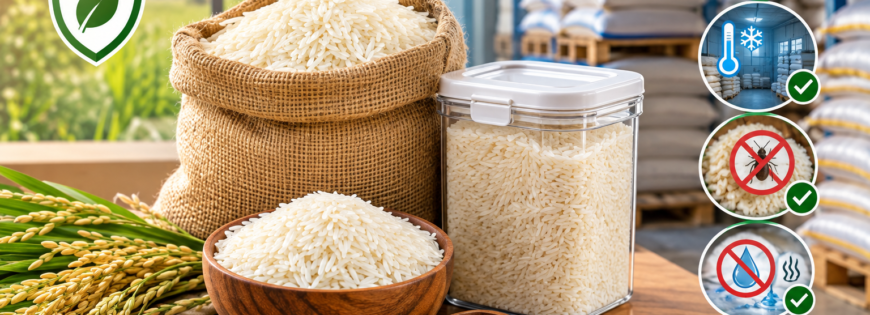
Pakistani Basmati rice is known for its long grains, pleasant aroma, delicate texture, and excellent cooking qualities. Whether you purchase rice for your family, restaurant, retail store, or food business, proper storage is important for maintaining its quality. Exposure to moisture, heat, insects, air, and strong odors can affect rice during storage.
Learning how to store Pakistani Basmati rice correctly can help preserve its freshness, appearance, aroma, and cooking quality for a longer period. With the right storage conditions and suitable containers, both households and businesses can protect their rice from common storage problems.
How to Store Pakistani Basmati Rice in the Right Environment
The storage environment has a major effect on rice quality. Basmati rice should ideally be kept in a clean, dry, and cool location. Avoid placing rice in areas exposed to direct sunlight, high temperatures, steam, or excessive humidity.
A kitchen cabinet, pantry, or dedicated dry-storage area can be suitable for household quantities. For larger quantities, businesses should use a clean warehouse or storage facility with appropriate ventilation and protection from moisture and pests.
How to Store Pakistani Basmati Rice Away From Moisture
Moisture is one of the most important factors to control when storing rice. Excess humidity can affect the texture and quality of rice and may encourage mold or other problems if storage conditions are poor.
When considering how to store Pakistani Basmati rice, choose a location that remains dry throughout the storage period. Keep rice away from sinks, dishwashers, cooking areas, and other sources of steam or water.
How to Store Pakistani Basmati Rice in Airtight Containers
For opened rice packages, transferring the rice into a clean, dry, airtight container can provide additional protection. A properly sealed container helps limit exposure to humidity, insects, dust, and odors.
Choose a food-safe container that is large enough to hold the rice without forcing it inside. Before adding a new batch, make sure the container is completely clean and dry.
Choose the Right Container for Rice Storage
The type of container you use can make a significant difference in maintaining rice quality. Original sealed packaging can be suitable for unopened rice, provided it is stored in appropriate conditions. Once a package has been opened, a tightly sealed food-grade container can offer additional protection.
Glass, food-grade plastic, or other suitable airtight storage containers can be used for household quantities. The container should have a secure lid and should not allow moisture to enter easily.
For commercial storage, rice should remain in suitable food-grade packaging and be kept off the floor. Pallets or shelving can help improve airflow and reduce the risk of contact with moisture.
Keep Pakistani Basmati Rice Away From Strong Odors
Rice can absorb odors from its surroundings, especially when packaging is open or not properly sealed. Therefore, rice should not be stored close to strongly scented foods, cleaning products, spices, chemicals, or other materials with powerful odors.
When learning how to store Pakistani Basmati rice, consider both humidity and surrounding odors. A clean pantry or dedicated dry-storage area can help protect the natural aroma of Basmati rice.
Protect Basmati Rice From Heat and Sunlight
Temperature is another important consideration for rice storage. High temperatures and direct sunlight can create unfavorable storage conditions and may affect the overall quality of the product.
Keep rice away from windows with direct sunlight and appliances that generate heat, such as ovens, stoves, and heaters. A cool, stable storage location is generally preferable.
How to Store Pakistani Basmati Rice During Hot Weather
In warm climates, choosing the storage location becomes even more important. During hot weather, avoid leaving rice in places where temperatures rise significantly during the day.
For commercial quantities, warehouses should be kept clean, dry, and appropriately ventilated. Businesses should also monitor storage conditions regularly, especially during periods of high heat or humidity.
Check Storage Areas Regularly
Regular inspections can help identify problems early. Check for moisture, damaged packaging, insects, unusual odors, or signs of contamination.
If rice packaging becomes damaged, move the unaffected product into suitable clean packaging when appropriate and investigate the cause of the damage.
Keep Rice Protected From Insects and Pests
Insects and pests can become a problem when dry foods are stored improperly. Clean storage areas and properly sealed packaging can reduce the risk.
Rice should be stored away from open food products and waste. Storage shelves and containers should be cleaned regularly, and spills should be removed promptly.
For businesses storing large quantities, pest-control procedures should be part of the overall food-storage system. Any pest-control measures should be suitable for food-storage environments and follow applicable regulations.
Use the First-In, First-Out Method
The first-in, first-out method, often called FIFO, is useful for businesses that store rice regularly. Under this approach, older stock is used or shipped before newer stock.
When considering how to store Pakistani Basmati rice for a business, labeling bags or containers with purchase dates can make stock rotation easier. This helps businesses monitor inventory and reduce the chance of older products remaining unused for extended periods.
Keep Rice Packaging Clean and Secure
Packaging should be inspected regularly for tears, holes, broken seals, or other damage. Even a small opening can expose rice to moisture, insects, dust, or odors.
Do not place rice bags directly against damp walls or floors. Use clean shelving or pallets and leave sufficient space for inspection and cleaning.
How to Store Pakistani Basmati Rice for Long-Term Quality
Long-term storage requires consistent attention to environmental conditions. The rice should remain dry, protected, and properly sealed throughout the storage period.
How to store Pakistani Basmati rice depends partly on the quantity being stored. A household storing a few kilograms has different requirements from a distributor or importer holding several tons. However, the basic principles remain similar: control moisture, avoid excessive heat, protect the packaging, maintain cleanliness, and monitor the storage area.
Monitor Rice Before Cooking or Selling
Before using or selling stored rice, inspect it for unusual smells, visible contamination, moisture damage, insects, or changes in appearance. If the product shows signs of spoilage or contamination, it should not be used simply because it has been stored for a certain amount of time.
Always follow the storage instructions provided by the rice supplier or packaging manufacturer when available.
Conclusion
Understanding how to store Pakistani Basmati rice can help households and businesses maintain the product’s quality for longer. Proper storage involves keeping rice in a cool, dry, clean environment away from direct sunlight, moisture, pests, heat, and strong odors.
For opened packages, airtight food-safe containers can provide additional protection. Businesses storing larger quantities should pay particular attention to warehouse cleanliness, packaging condition, stock rotation, ventilation, and pest prevention.
By following good storage practices and regularly checking rice and its surroundings, you can help protect the natural aroma, appearance, texture, and overall quality of Pakistani Basmati rice throughout its storage period.