

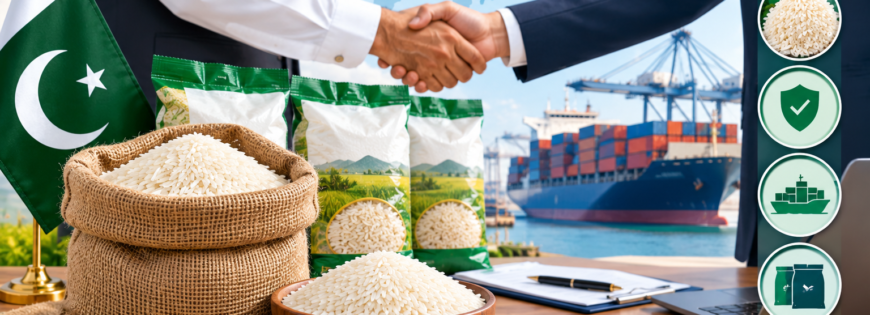
For importers, wholesalers, distributors, retailers, restaurants, and food businesses, sourcing rice from Pakistan can provide access to a wide selection of quality rice products. Pakistan has a strong reputation in the international rice market, particularly for Basmati and long-grain varieties. Businesses that purchase rice in large quantities often look for suppliers who can provide consistent quality, suitable packaging, competitive commercial terms, and dependable shipment arrangements.
Buying Pakistani rice directly from exporters can create a direct connection between the international buyer and the supplier in Pakistan. Instead of relying on several trading intermediaries, businesses can communicate their requirements directly with an exporting company. This can make it easier to discuss rice varieties, quality specifications, packaging, quantities, documentation, and shipping requirements before placing an order.
Benefits of Buying Pakistani Rice Directly From Exporters
One of the main benefits of working directly with an exporter is improved communication throughout the purchasing process. International buyers can explain exactly what they need and receive information directly from the company handling the rice supply.
For example, a wholesaler may require a particular Basmati variety with a specific grain length, moisture level, broken percentage, milling specification, and packaging size. Discussing these requirements directly with the exporter can help both sides establish clear expectations before the order is confirmed.
Direct sourcing can also make supplier relationships easier to develop. When an importer works with the same exporter over multiple orders, both businesses can become familiar with product specifications, packaging preferences, order quantities, and shipment schedules.
Competitive Pricing When Buying Pakistani Rice Directly From Exporters
Price is an important consideration for businesses purchasing rice in commercial quantities. Buying Pakistani rice directly from exporters can reduce the number of intermediaries involved in the supply chain. Fewer layers between the producer, processor, exporter, and buyer may create opportunities for more competitive commercial pricing.
However, rice prices are influenced by several factors. The variety, grade, crop conditions, milling quality, order size, packaging, transportation, exchange rates, and international market conditions can all affect the final price.
Bulk buyers should therefore request detailed quotations rather than comparing only the basic price per bag. A complete quotation should clarify the rice specification, quantity, packaging, shipping terms, and other applicable costs.
Comparing Costs Before Buying Pakistani Rice Directly From Exporters
Businesses should compare suppliers carefully before making a purchasing decision. A low quoted price does not necessarily represent the lowest overall sourcing cost if the product specification, packaging, freight, or service differs.
Importers can request samples and detailed product specifications before placing large commercial orders. This allows them to compare rice quality and commercial terms more effectively.
Access to Different Pakistani Rice Varieties
Pakistan produces several rice varieties that serve different markets and culinary applications. International buyers may source premium Basmati as well as non-Basmati long-grain varieties according to their customers’ requirements.
Common varieties available from Pakistani suppliers can include 1121 Basmati Rice, Super Kernel Basmati Rice, D98 Basmati Rice, PK-386 Rice, IRRI-6 Rice, and IRRI-9 Rice.
Each variety has its own characteristics. Basmati rice is commonly associated with long grains and a distinctive aroma, while other long-grain varieties may be selected for different cooking applications and price points.
Selecting the Right Variety for Your Market
Before buying Pakistani rice directly from exporters, businesses should understand what their customers expect. Restaurants may prioritize cooking performance and aroma, while supermarkets may focus on appearance, packaging, brand presentation, and consumer demand.
Wholesalers and distributors may also require different grades or packaging formats depending on the markets they serve.
Understanding customer preferences before ordering can help businesses select a rice variety that fits their target market instead of choosing a product based only on price.
Rice Specifications and Quality Standards
When purchasing rice internationally, buyers should pay attention to specifications such as grain length, broken percentage, moisture content, foreign matter, milling quality, sorting, and polishing.
The exact specifications required can vary depending on the buyer, destination market, and intended use. Clear specifications should be agreed upon between the buyer and supplier before production and shipment.
Better Quality Control
Quality control is an important part of international rice sourcing. Direct communication with an exporter allows buyers to discuss their quality expectations before an order is processed.
Buying Pakistani rice directly from exporters may make it easier to communicate specific requirements regarding grain appearance, cleanliness, sorting, milling, packaging, and other product characteristics.
Buyers can ask suppliers about their processing facilities, quality-control procedures, available certifications, laboratory testing, and inspection processes. Depending on the transaction, buyers may also arrange independent inspections or request samples before shipment.
Checking Rice Quality Before Shipment
International buyers should establish quality requirements in writing. A clear purchase agreement can specify the variety, grade, quantity, packaging, quality parameters, and inspection requirements.
For larger orders, businesses may consider using an independent inspection service where appropriate. This can provide an additional check that the shipment corresponds with the agreed specifications.
Consistent Bulk Rice Supply
A reliable supply is essential for wholesalers, distributors, supermarkets, restaurants, catering businesses, and food manufacturers. These businesses may need regular quantities of rice to meet customer demand.
Buying Pakistani rice directly from exporters can support direct communication about recurring orders and expected shipment schedules. Buyers can discuss their anticipated requirements with suppliers and determine whether the exporter has the capacity to handle regular commercial orders.
Businesses should consider an exporter’s production and sourcing capacity, warehouse facilities, processing capabilities, shipment experience, and ability to meet agreed schedules.
Planning Regular Rice Shipments
Good supply planning can help reduce unexpected purchasing problems. Buyers should estimate their expected consumption and discuss order schedules with the supplier.
For recurring business, maintaining consistent product specifications can also make future orders easier to manage. The buyer and exporter can establish preferred varieties, grades, packaging formats, and shipment quantities.
Customized Rice Packaging
Packaging can be important for both wholesale and retail businesses. Different markets may require different bag sizes, materials, labels, designs, and branding.
Exporters may offer packaging options suitable for commercial buyers, retailers, restaurants, distributors, or private-label businesses. Buyers should discuss packaging requirements early because customized packaging may require additional preparation and lead time.
Packaging Requirements for International Buyers
When buying Pakistani rice directly from exporters, businesses can communicate their preferred bag size and packaging style directly to the supplier.
For example, a distributor may need larger commercial bags, while a supermarket brand may require smaller consumer-friendly packages with customized labeling. Packaging should also be suitable for transportation and storage during international shipping.
Easier Communication With Suppliers
Communication plays a major role in international trade. Importers need to discuss product details, pricing, payment arrangements, shipping, documentation, packaging, and delivery schedules.
A direct relationship with an exporter can provide a clearer communication channel. Buyers can ask questions and receive information from the company responsible for preparing the rice shipment.
Good communication can also help prevent misunderstandings. Product specifications, quantities, packaging requirements, and shipment terms should be confirmed in writing before an order is finalized.
Building a Long-Term Supplier Relationship
Businesses that regularly source rice may benefit from developing long-term relationships with reliable suppliers. Over time, buyers and exporters can become familiar with each other’s requirements and business processes.
Long-term cooperation can make it easier to plan recurring purchases, discuss new varieties, introduce packaging changes, and manage future orders.
What to Check Before Choosing a Pakistani Rice Exporter
Before placing a commercial order, international buyers should evaluate the supplier carefully. Important factors can include company experience, rice varieties offered, product quality, processing facilities, certifications, packaging capabilities, export documentation, communication, and shipment history.
Buyers should also verify the company’s business information and understand the terms of the proposed transaction.
Buying Pakistani rice directly from exporters should involve proper due diligence rather than relying only on a website, price quotation, or promotional claim. Requesting samples, product specifications, company information, and commercial references can help buyers understand the supplier before committing to a large order.
Conclusion
For importers, wholesalers, distributors, restaurants, retailers, and other food businesses, buying Pakistani rice directly from exporters can provide a practical way to source rice while maintaining direct communication with suppliers. Potential advantages include access to different Pakistani rice varieties, clearer quality specifications, bulk supply options, customized packaging, and direct discussion of commercial requirements.